
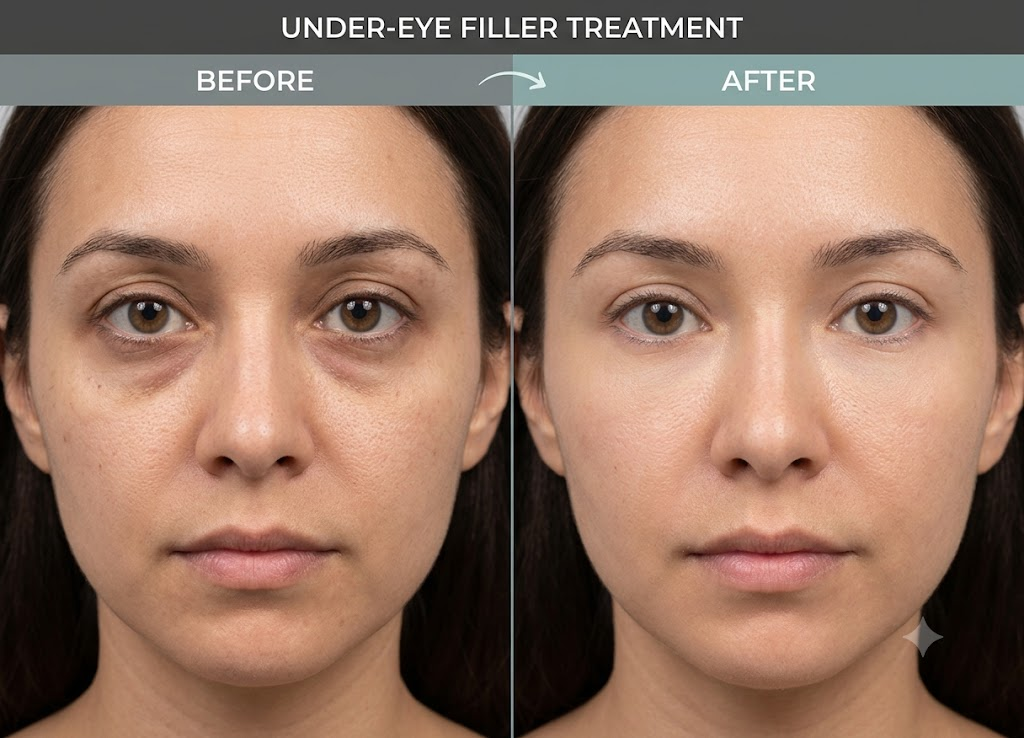

Dark circles, hollow tear troughs, and tired-looking eyes can make people appear older than they feel. For many adults in the United States, under eye filler has become a popular cosmetic treatment for restoring volume and creating a more refreshed look without surgery.
This minimally invasive procedure can produce noticeable results with little downtime. However, understanding how under eye filler works, its benefits, potential risks, and whether you’re a good candidate is essential before scheduling an appointment.
What Is Under Eye Filler?
Under eye filler is a cosmetic injectable treatment designed to improve the appearance of hollow areas beneath the eyes, often called tear troughs. Most providers use hyaluronic acid fillers because they add volume while attracting moisture to the skin. The treatment aims to reduce shadows and create a smoother transition between the lower eyelid and cheek.
Unlike surgery, under eye filler does not remove skin or reposition fat. Instead, it fills areas that have lost volume due to aging, genetics, or weight changes. The result is often a brighter, less fatigued appearance that still looks natural when performed by an experienced injector.
Several dermal fillers may be used depending on the patient’s anatomy and goals. The choice of product, injection technique, and amount of filler significantly affect the final outcome. Therefore, selecting a qualified medical professional is one of the most important decisions in the process.
Key Features of Under Eye Filler
One of the main features of under eye filler is its ability to deliver immediate improvements. Most patients notice a visible difference right after treatment, although mild swelling can temporarily affect the final appearance. Results generally become clearer within a few days.
Another notable feature is the minimally invasive nature of the procedure. Treatments usually take less than an hour and require little recovery time. Many people return to normal activities the same day, making it an appealing option for busy professionals.
The fillers commonly used in this area are reversible. If the result is unsatisfactory or complications occur, an enzyme called hyaluronidase can dissolve certain hyaluronic acid fillers. This added level of flexibility makes the treatment more reassuring for many first-time patients.
Benefits of Under Eye Filler
The biggest benefit of under eye filler is a more rested and youthful appearance. By restoring lost volume beneath the eyes, the treatment can reduce shadows that make dark circles appear more pronounced. Many patients report looking healthier and less tired after the procedure.
Another advantage is that results can appear natural when performed correctly. Instead of dramatically changing facial features, the treatment subtly enhances the area. This approach appeals to people who want cosmetic improvements without obvious signs of work being done.
Additionally, under eye filler can improve confidence. Feeling self-conscious about tired-looking eyes may affect personal and professional interactions. A refreshed appearance often helps individuals feel more comfortable in photographs, meetings, and social situations.
How Does Under Eye Filler Work?
Under eye filler works by adding volume to hollow areas beneath the lower eyelids. Most fillers contain hyaluronic acid, a naturally occurring substance in the body that attracts water and supports hydration. Once injected, the filler creates a smoother contour between the eyelid and cheek.
The treatment process typically begins with a consultation and facial assessment. A healthcare provider determines whether volume loss is causing the concern or if other issues, such as pigmentation or fat pads, contribute to the appearance of dark circles.
After the injections, the filler integrates with surrounding tissues and provides subtle support to the under-eye region. Results generally last between six months and two years, depending on the product used, metabolism, and individual characteristics.
Important Things to Know About Under Eye Filler
Not everyone is an ideal candidate for under eye filler. People with significant skin laxity, severe eye bags, or certain medical conditions may not achieve optimal results. A professional consultation is necessary to determine the most suitable treatment approach.
Although the procedure is generally considered safe, the under-eye area contains delicate blood vessels and thin skin. Because of this complexity, choosing an experienced injector is critical. Improper placement can lead to lumps, swelling, or uneven results.
Cost is another factor worth considering. Under eye filler prices vary widely across the United States depending on location, provider expertise, and the amount of product required. Since the treatment is cosmetic, insurance usually does not cover the expense.
Common Mistakes to Avoid
One common mistake is choosing a provider solely based on low pricing. Cosmetic injectables require skill and detailed knowledge of facial anatomy. An inexperienced injector may increase the risk of complications and deliver results that appear unnatural.
Another error involves expecting under eye filler to fix every concern around the eyes. The treatment works best for volume loss but may not significantly improve pigmentation, loose skin, or prominent fat pads. Realistic expectations contribute greatly to satisfaction.
Patients should also avoid ignoring aftercare instructions. Rubbing the treated area, engaging in intense exercise too soon, or skipping follow-up appointments can affect healing and potentially interfere with the final outcome.
Expert Tips and Best Practices
Always schedule a consultation with a qualified and licensed provider who has extensive experience with tear trough treatments. Ask to see before-and-after photos and discuss your medical history in detail. This step helps determine whether the procedure is appropriate for your goals.
Start conservatively with smaller amounts of filler whenever possible. The under-eye area often requires less product than patients expect. Adding filler gradually can create more natural-looking results and reduce the likelihood of overcorrection.
Maintaining healthy skin habits also enhances long-term results. Adequate sleep, sun protection, hydration, and a balanced skincare routine support the overall appearance of the eye area and help preserve a refreshed look after treatment.
Comparison Table
| Feature | Description | Benefits | Drawbacks |
| Treatment Type | Injectable dermal filler | Non-surgical solution | Temporary results |
| Procedure Time | Usually 20–45 minutes | Convenient appointment | Mild swelling afterward |
| Downtime | Minimal recovery | Return to daily activities quickly | Bruising may occur |
| Results | Immediate improvement | More youthful appearance | Final results take a few days |
| Longevity | Six months to two years | Long-lasting enhancement | Maintenance treatments needed |
| Reversibility | Hyaluronic acid fillers can be dissolved | Added safety option | Not all fillers are reversible |
| Cost | Varies by provider and region | Customized treatment | Can be expensive |
Future Outlook of Under Eye Filler
Advancements in cosmetic medicine continue to improve under eye filler techniques and safety. New injection methods and a better understanding of facial anatomy allow practitioners to create increasingly natural results with fewer complications.
Researchers are also exploring longer-lasting filler formulations and regenerative treatments that combine fillers with other procedures. These innovations may provide more personalized solutions for addressing under-eye concerns in the future.
As demand for minimally invasive procedures grows, patients can expect more education and improved treatment standards. However, the importance of choosing an experienced provider will remain essential regardless of technological developments.
Conclusion
Under eye filler has become one of the most sought-after cosmetic treatments for reducing hollowness and creating a refreshed, youthful appearance. When performed by a skilled professional, it can deliver subtle yet meaningful improvements with minimal downtime.
Before deciding on under eye filler, take time to understand the benefits, limitations, and potential risks. A thorough consultation with an experienced injector can help determine whether this treatment is the right option for achieving your aesthetic goals.
FAQs
Q1. How long does under eye filler last?
Most under eye filler treatments last between six months and two years. Longevity depends on the type of filler used, the amount injected, and individual metabolism. Some people may require touch-up treatments sooner to maintain their desired appearance.
Q2. Is under eye filler painful?
Most patients experience only mild discomfort during treatment. Providers often use numbing cream or fillers containing lidocaine to improve comfort. The procedure is generally well tolerated, and any tenderness usually resolves within a few days.
Q3. Can under eye filler remove dark circles completely?
Under eye filler can improve dark circles caused by volume loss and shadowing. However, it may not fully correct discoloration resulting from pigmentation, genetics, or vascular issues. A consultation can help identify the underlying cause.
Q4. What are the risks of under eye filler?
Potential side effects include swelling, bruising, lumps, and temporary asymmetry. Although rare, serious complications such as vascular occlusion can occur. Choosing an experienced and qualified injector significantly reduces these risks.
Q5. Who is a good candidate for under eye filler?
People with mild to moderate tear trough hollowness and good skin quality are often ideal candidates. Individuals with severe eye bags or excessive skin laxity may benefit from alternative treatments instead of filler injections.
You May Also Read: Females Firsts